
On Wednesday, April 1, 2026, at 6:35 in the evening Eastern time, a Space Launch System rocket left Launch Complex 39B at the Kennedy Space Center carrying four people toward a destination no crew had aimed for in more than half a century. Artemis II was a ten-day loop around the Moon on a free-return trajectory — out, around, home — and on each astronaut's wrist, standard issue, rode an Omega Speedmaster. The Moonwatch, it turns out, keeps finding its way back to the Moon.
The mission: ten days out and back
Artemis II was the first crewed flight beyond low Earth orbit since Apollo 17 left the Moon in December 1972. Riding atop the SLS were four astronauts inside the Orion capsule Integrity, and the flight plan was deliberately conservative in all the right ways: no lunar orbit insertion, no landing — a free-return trajectory in which Orion swings around the far side and the Moon's own gravity bends its path home. The spacecraft performed so well on ascent that several of the pre-planned trajectory correction burns were cancelled outright.
On Flight Day 2, Integrity's service module engine fired for translunar injection — the first crewed burn of that kind in more than half a century. What followed, over the next eight days, was the proving run the whole Artemis program needed: systems checked in deep space, the crew conducting experiments and demonstrations with the spacecraft that will carry the next landing crew. The flyby itself, on April 6, delivered the moments that will live in the mission's history. The crew became the first humans to see the far side of the Moon with their own eyes. They watched a total solar eclipse from deep space. They passed behind the Moon in a forty-minute communications blackout, utterly alone, and re-emerged on course. And they travelled some 406,771 kilometres from Earth — farther than any humans have ever been — eclipsing the distance record Apollo 13 set in 1970.
On Friday, April 10, at 8:07 PM Eastern, Integrity splashed down in the Pacific off San Diego, ten days after it left, and was recovered by NASA and Navy teams. Reentry came at more than 38,000 kilometres per hour — the fastest crewed return since Apollo 17. Everything the flight was meant to prove, it proved.
The crew
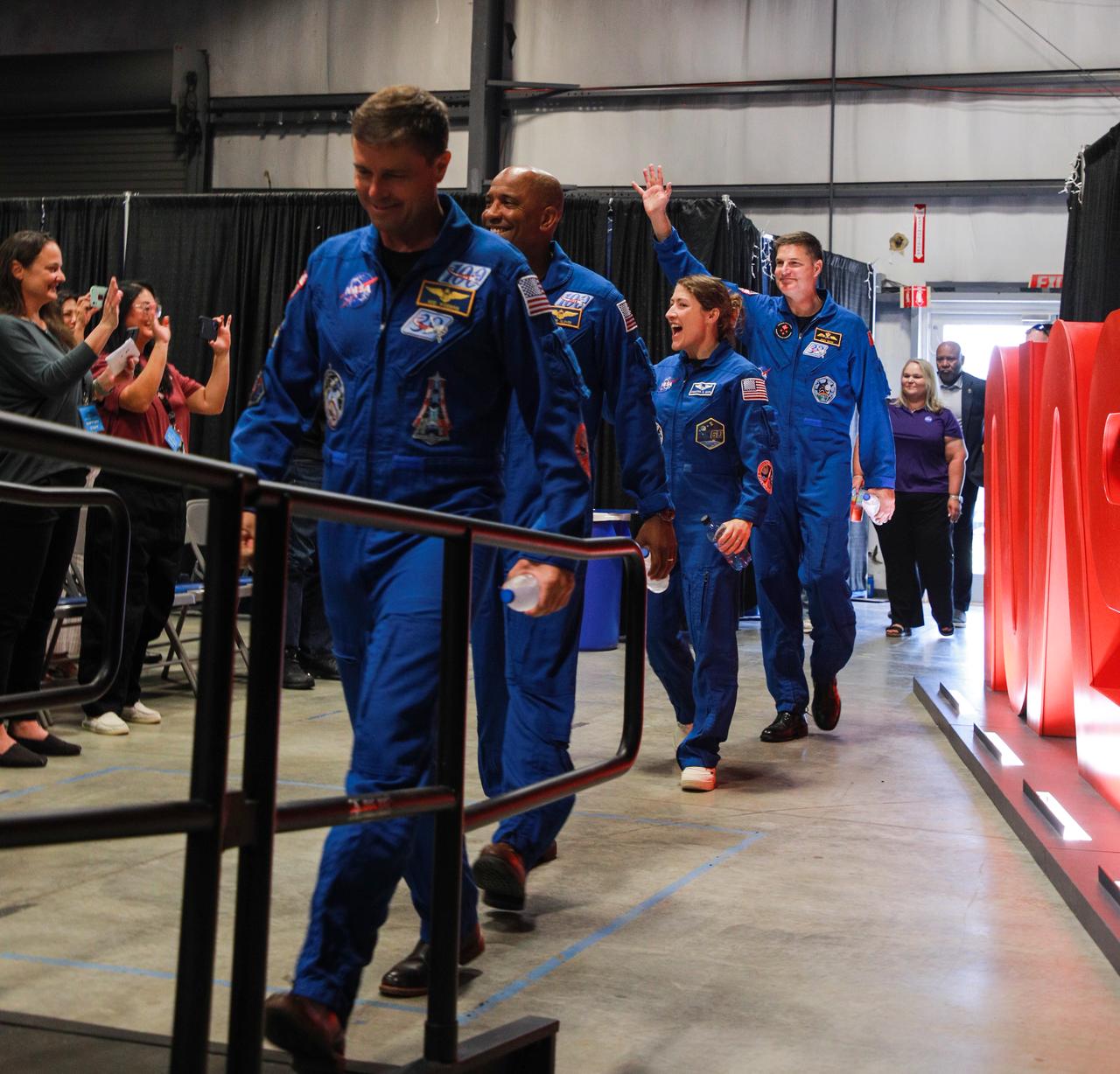
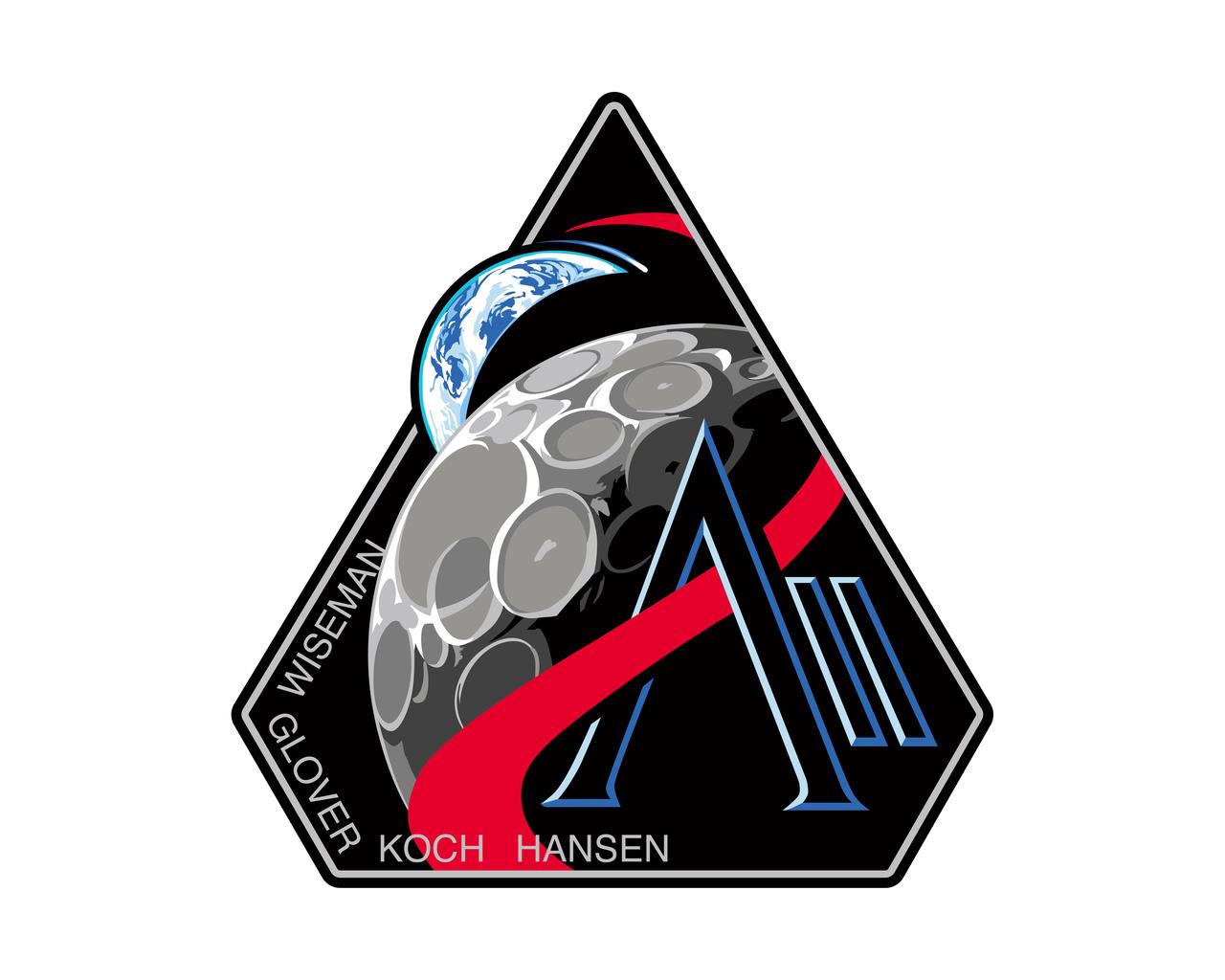
The four were Commander Reid Wiseman and Pilot Victor Glover, with Mission Specialists Christina Koch of NASA and Jeremy Hansen of the Canadian Space Agency — the first Canadian to fly beyond Earth orbit. An international crew, a NASA spacecraft, a European-built service module: the return to the Moon was, fittingly, a broader enterprise than the race that first got us there.
What was on their wrists
Here the record is admirably clear. Every member of the crew wore the Omega Speedmaster X-33 as the mission watch. NASA confirmed to the New York Post that the X-33 was standard issue for the flight — and that the crew was also permitted to wear timepieces of their choice alongside it.
The X-33 is the ana-digi Speedmaster: quartz-driven hands over a digital display, designed in the 1990s with input from astronauts and test pilots, and part of NASA's official kit since 1998. A 2013 U.S. government document called it "the watch of choice for U.S. astronauts," which is about as official as horology gets. The design logic is pure mission utility: three time zones, multiple alarms, chronograph, countdown timer, and mission-elapsed and phase-elapsed readouts — and if the cold of space freezes the digital display, the analog hands keep going, a fallback the National Air and Space Museum singles out as the point of the design. Coverage identified the crew's watches as the second-generation X-33, the 318.92.42.79.01.001 "NASA watch" line. For collectors, the X-33's public history is worth knowing precisely: Omega sold the original to the public from 1998 to 2006, then relaunched the line in 2014 as the Skywalker X-33.
And then there is the detail this journal's readers will care about most. At several points during the mission broadcasts, pilot Victor Glover appeared to be wearing a classic mechanical Speedmaster Professional on his wrist alongside the issued X-33. NASA's allowance of personal timepieces makes it plausible; the footage makes it suggestive. However you read the evidence, the symbolism needs no help: the mechanical Moonwatch, sixty-one years after flight qualification, rode a free-return trajectory around the Moon again.
The through-line: 1965 to the far side
Consider the line. In 1965, an off-the-shelf Speedmaster survived eleven environmental tortures in Houston and was declared flight qualified for all manned space missions — the story told in full in A line drawn to the Moon. In 1969, Buzz Aldrin's reference 105.012 became the first wristwatch worn on the lunar surface, and it remains the only watch ever worn there. In 1970, Jack Swigert timed Apollo 13's 14-second course-correction burn on his Speedmaster — the wristwatch as life-support instrument. In December 1972, Apollo 17 closed the book, and no crew left low Earth orbit again for more than half a century.
Artemis II did not land. But it did what the program needed first: it proved the road back is open — and it did so with a Speedmaster on every wrist. The mechanical chronograph and the ana-digi mission timer are two generations of the same idea: a timing instrument that keeps working when it matters. That is the whole of the Speedmaster's claim, and it is enough.
What it means for collectors
First, the X-33 joins the lunar-mission record. It was always a NASA-issue tool; now it belongs to a flown-around-the-Moon lineage. The original 1998–2006 production and the Skywalker relaunch are no longer just ana-digi curiosities — they are the family that went back.
Second, the distinctions between generations matter more now. The issued watches were the second-generation "NASA watch," not the current Marstimer. When astronaut-attributed X-33s surface — and with space-flown material, they eventually surface — the reference and the generation will be the whole story. Precision about which X-33 is which has just become a collector's skill, not a footnote.
Third, and most simply: the mechanical Moonwatch's lineage now spans two lunar eras. The 105.012 went to the surface in 1969; a mechanical Professional rode a free-return in 2026. No other watch family can say that — because no other watch family carries NASA's flight-qualification record. Provenance is the collector's true currency, and Artemis II just minted some.
What's next
Artemis III is slated to put a crew on the lunar surface in 2028 — the first landing since 1972, and the chapter where a Moonwatch-generation instrument may stand on the surface again. Before that comes the robotic vanguard: Griffin Mission One, a lunar lander targeted for no earlier than November 2026, launching on a Falcon Heavy from LC-39A. The Space Coast is about to get busy again, and the Moon is about to get company.
This series will follow the campaign mission by mission. For the launches themselves — dates, vehicles, and outcomes as they fly — it has a living companion: the launches page, kept current with every Space Coast flight tied to the Moon's return. Follow it there; the story is only getting started.
Sources
- NASASpaceFlight — Artemis II returns to Earth after historic 10-day mission around the Moon: https://www.nasaspaceflight.com/2026/04/artemis-ii-return/
- Associated Press — Artemis II splashdown report (via LatestLY): https://www.latestly.com/technology/science/artemis-ii-mission-nasa-astronauts-return-to-earth-from-moon-with-splashdown-to-close-out-record-breaking-lunar-voyage-watch-video-7388853.html
- New York Post — Artemis II astronauts wore top-of-the-line Omega wristwatches around the Moon: https://nypost.com/2026/04/08/us-news/artemis-ii-astronauts-wore-top-of-the-line-omega-wristwatches-around-the-moon-and-one-slipped-on-an-old-school-nasa-icon/
- Men's Journal — The Watch Used on NASA's Artemis II Mission: https://www.mensjournal.com/gear/omega-speedmaster-x-33-watch-astronauts-artemis-ii
- Mint Lounge — The wristwatches of Artemis II astronauts: https://www.livemint.com/mint-lounge/business-of-life/artemis-ii-moon-flyby-nasa-astronauts-omega-speedmaster-11775402885687.html
- Lifestyle Asia — A look at the watches of the Artemis II mission crew: https://www.lifestyleasia.com/bk/style/watches/watch-spotting-a-closer-look-at-the-watches-of-the-artemis-ii-mission-crew/
- Luxury Bazaar — Omega X-33 Speedmaster: "NASA Watch" Worn by Artemis II Crew: https://www.luxurybazaar.com/grey-market/omega-speedmaster-x-33-nasa-artemis-ii/