
After Apollo, the Speedmaster didn’t retire — it adapted. The mechanical Moonwatch kept flying while a second branch of the family grew beside it: a mission timer designed with astronauts, for the way they actually work in orbit.
Skylab and the handshake in orbit
NASA bought more Speedmasters for Skylab (1973–74) and the Apollo-Soyuz Test Project. The ASTP flight of July 1975 — the American-Soviet handshake in orbit — is a quiet horological footnote with real charm: at NASA engineer James Ragan’s recommendation, both crews wore Omega Speedmaster chronographs as common timing instruments. The NASA crew flew 105.012s and 145.012s; the Soviet cosmonauts flew 145.022s. One watch, two space programs, one docking.
The Shuttle: two Speedmasters
The 145.022 was qualified for Shuttle missions in 1978, and the mechanical Moonwatch flew the orbiter era. But NASA also adjusted its flight-qualification standards to permit quartz watches inside the orbiter — catalogued as “crew preference watches.” For spacewalks, the Omega chronograph remained the only NASA flight-qualified option, a rule that holds through ISS EVAs to this day.
1998: the X-33. Omega’s Speedmaster X-33 — a titanium ana-digi mission timer with mission-elapsed time, alarms, and countdown — was developed with direct input from astronauts on the functions they actually needed (including an 80-decibel alarm audible on the noisy flight deck), unveiled at Johnson Space Center, and NASA-certified the same year. A prototype first flew on STS-90 in April 1998 with astronaut David Williams. The heritage timeline draws the full lineage view; the human detail is that astronauts helped design their own watch.
The Station watch
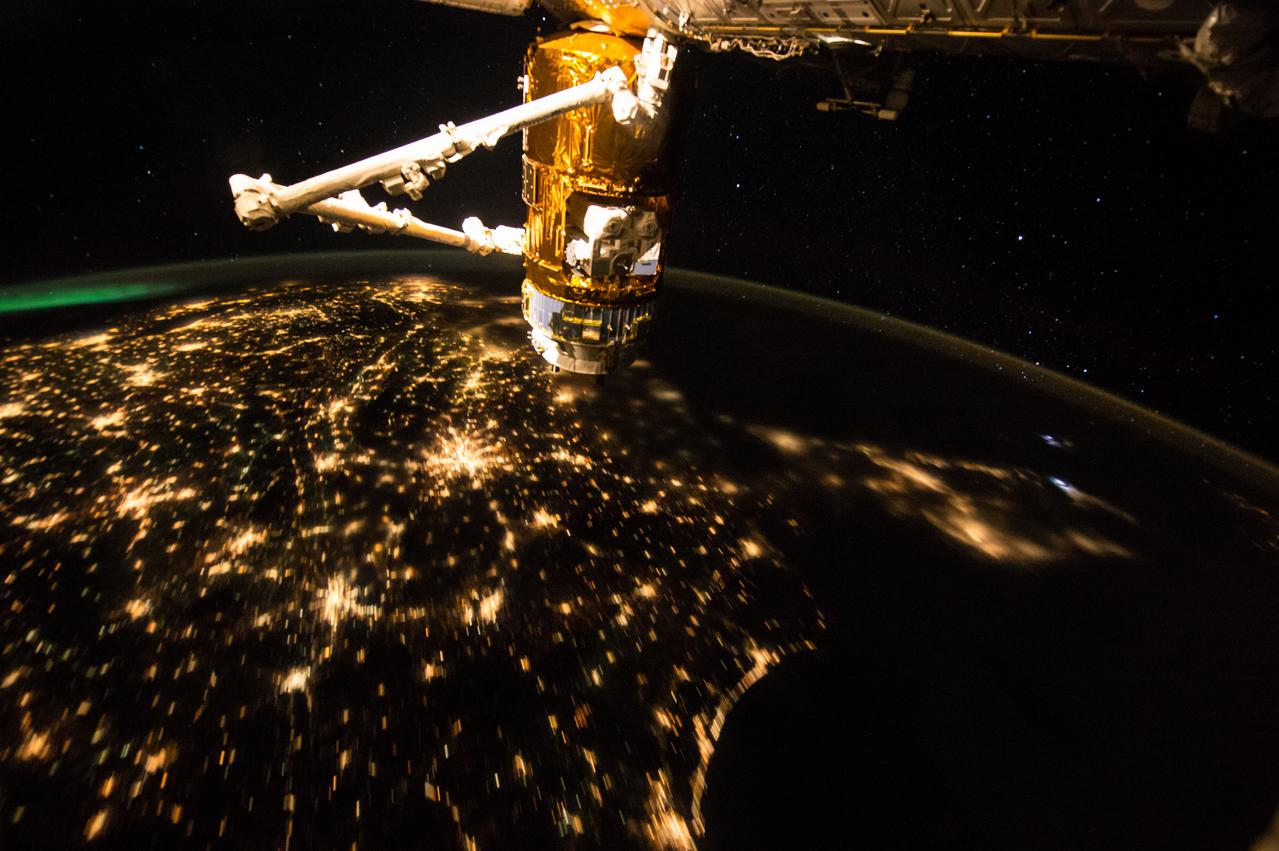
Aboard the International Space Station, the X-33 became the working watch — mission-elapsed time, multiple alarms, a chronograph readable at a glance in any light. A 2013 U.S. government document called it “the watch of choice for U.S. astronauts.” Terry Virts wore a Skywalker X-33 on Expedition 42 spacewalks in 2015; as recently as May 2025, Anne McClain and Nicole Ayers wore Speedmasters on an ISS spacewalk. In 2022 NASA transferred a Skywalker X-33 to the Smithsonian — the mission timer joining the Moonwatch in the museum.
Artemis: back to the Moon
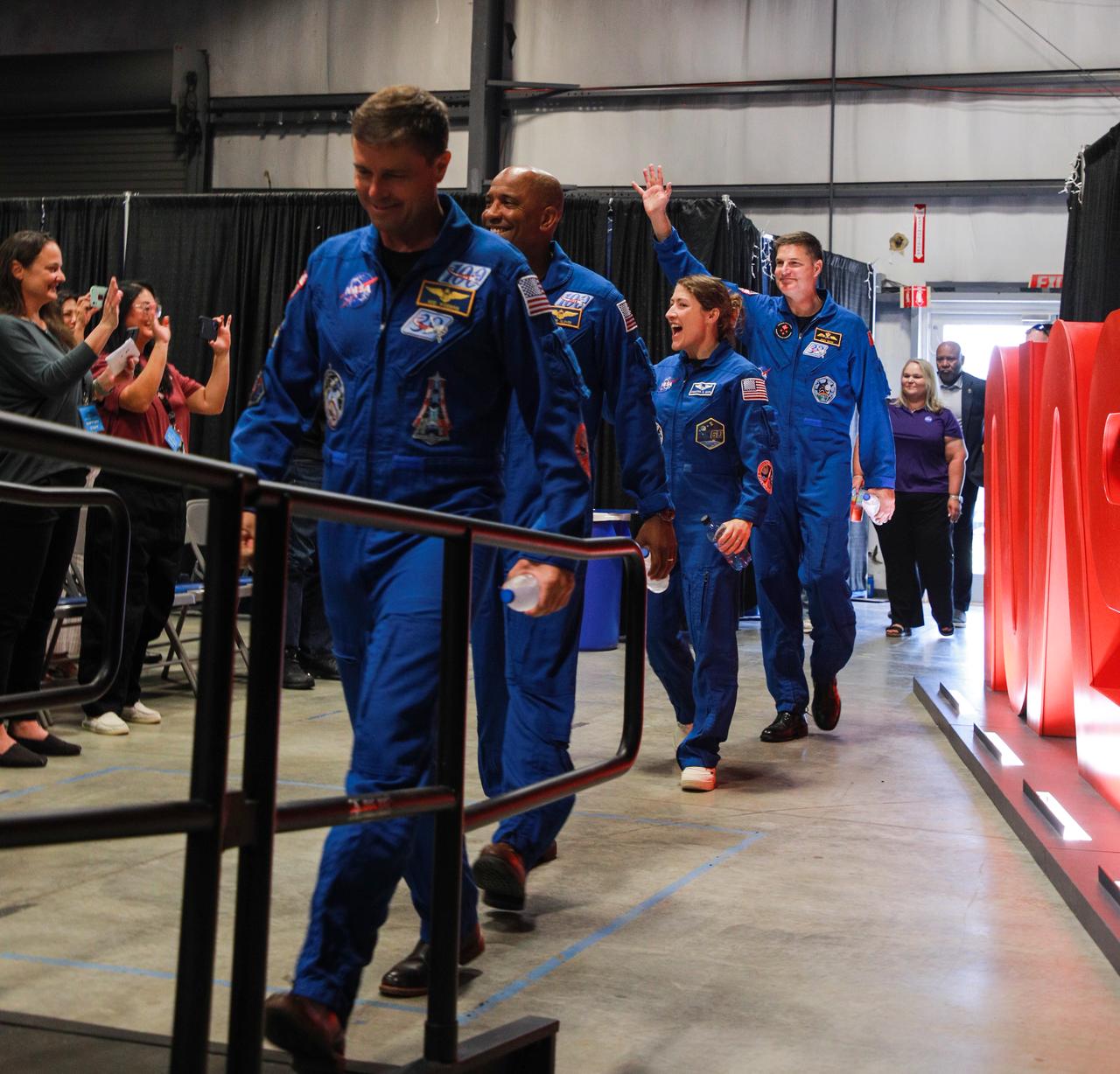
In April 2026, Artemis II — Commander Reid Wiseman, pilot Victor Glover, mission specialists Christina Koch and Jeremy Hansen — became the first crew toward the Moon since 1972. Per mission reporting, all four were photographed wearing the second-generation Speedmaster X-33 strapped over their suit sleeves: the visible, operational mission watch of the flight. The crew also carried personal watches — including, per watch-press rundowns of NASA-sourced material, a new Speedmaster Professional Moonwatch and Koch’s father’s Speedmaster Moonwatch. The mechanical Moonwatch rode along; the mission timer did the work. Sixty-one years after flight qualification, the arrangement Schirra started — personal watch, official watch, side by side — is still the shape of things.
Speedmaster Gonzales™ is an independent horology publication. It is not affiliated with or endorsed by NASA, the Smithsonian Institution, Omega SA, or any astronaut or estate named here. Watch identifications are editorial commentary on the public historical record.
Sources: Smithsonian NASM, “Space Time Technology” (2025) · Fratello: the Apollo-Soyuz 50th anniversary · Hodinkee: the Speedmaster X-33 · Hodinkee: Talking Watches with David Williams (STS-90) · Fratello: the watches of Artemis II