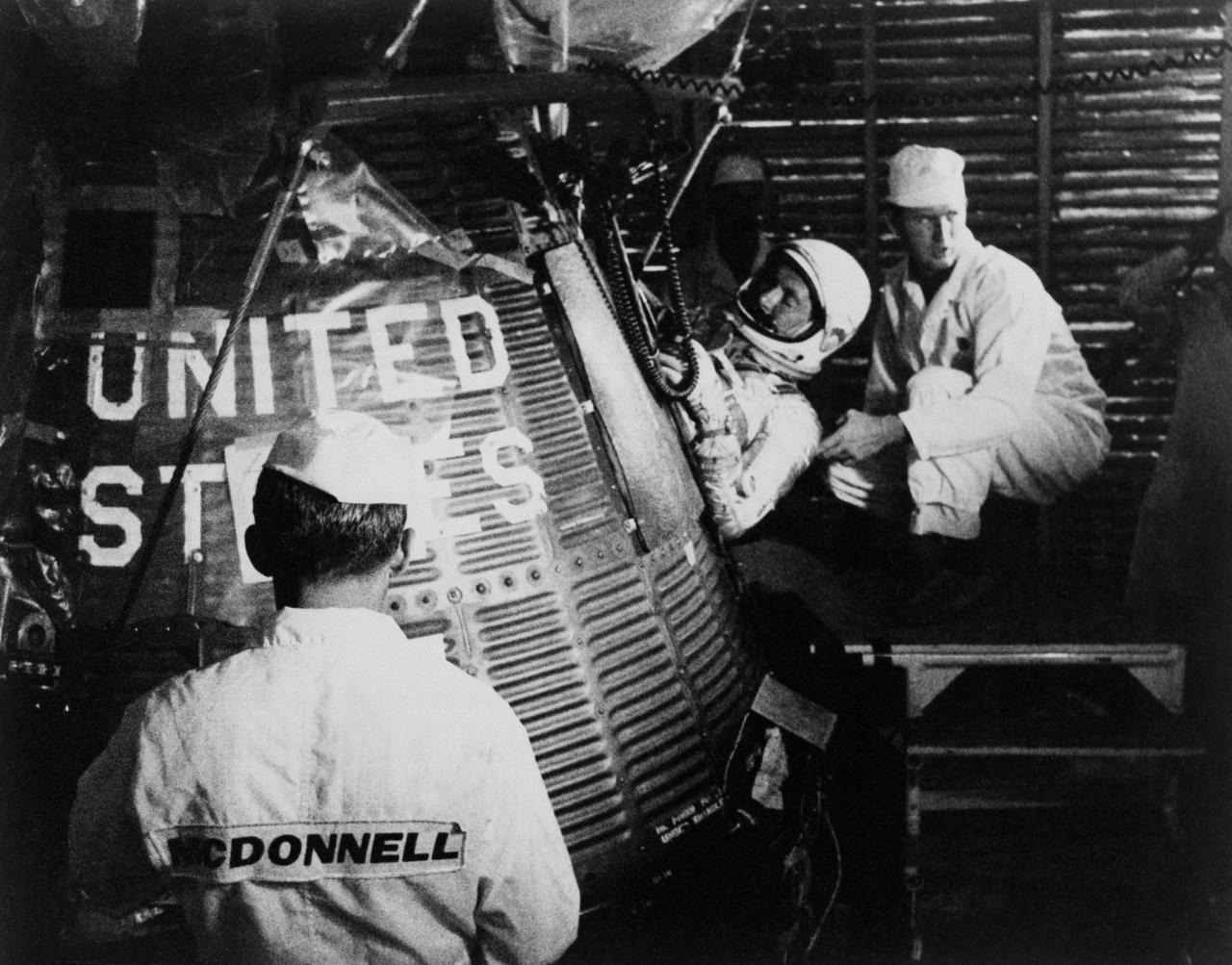
Nobody planned the watch story. In the first years of human spaceflight, a watch was personal equipment — bought, borrowed, or strapped on as a backup — and the record of who wore what reads like a field notebook, not a procurement file. That changed in 1965. This is the before.
1961 – 1962: the first wrists
April 12, 1961 — Yuri Gagarin, Vostok 1. The first watch in space was a Soviet-issue Sturmanskie navigator’s watch from the First Moscow Watch Factory, on Gagarin’s wrist for the 108-minute orbit. (Collector debate persists over the jewel count of the exact variant — we state only “Sturmanskie,” which the record supports.)
February 20, 1962 — John Glenn, Friendship 7. Glenn orbited three times with a Heuer stopwatch, ref. 2915A — a 12-hour, 1/5-second instrument strapped over his suit sleeve as the capsule’s backup clock. It was a stopwatch, not a wristwatch, which is why the “first Swiss” honors split: first Swiss timepiece in space (Glenn’s Heuer), first Swiss wristwatch in space (Carpenter’s Breitling, below). The Heuer is held by the Smithsonian today.
May 24, 1962 — Scott Carpenter, Aurora 7. Carpenter flew a custom Breitling Navitimer “Cosmonaute” — 24-hour dial, simplified slide rule, wider bezel, stretch bracelet — the first Swiss wristwatch in space, per Breitling’s own account. Seawater flooded it during the three-hour wait for recovery after splashdown; Breitling keeps the corroded original, unrestored, in its archives.
The first Omega in space
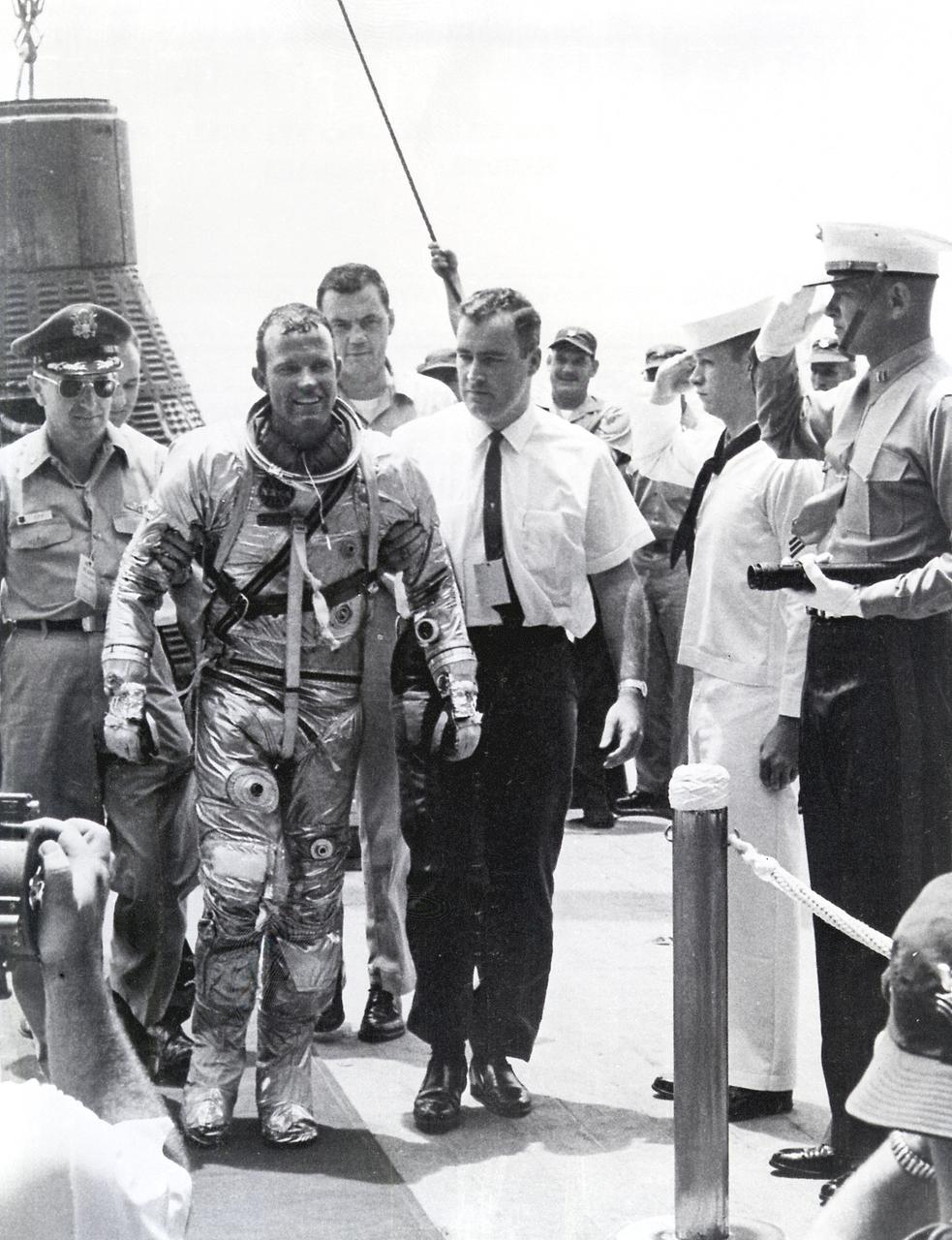
October 3, 1962 — Wally Schirra, Sigma 7. Schirra flew Mercury-Atlas 8 wearing his personally purchased Omega Speedmaster CK 2998 (cal. 321) as a backup to the capsule timer — the first Omega in space, bought out of his own pocket three years before NASA issued a single one. Omega’s own heritage page confirms it. For the collector, this is the hinge the whole story turns on: the watch arrived in orbit as private equipment.
May 15–16, 1963 — Gordon Cooper, Faith 7. Cooper closed out Project Mercury wearing his own Speedmaster CK 2998, and reportedly compared it against a Bulova Accutron during the 34-hour flight — an early, informal head-to-head between the two technologies that would contest NASA’s official business two years later.
The through-line for the CK 2998 in our reference library: this is the reference that went first. Everything after — the qualification, the Moon — starts with two astronauts spending their own money.
1965: NASA chooses
Mercury-astronaut feedback reached astronaut-office chief Deke Slayton, who asked NASA engineer James Ragan for a durable, accurate, off-the-shelf wrist chronograph. In 1964 NASA sent a request to ten companies; four submitted. Hamilton offered a pocket watch and was disqualified. The contenders: Omega’s ST 105.003 (cal. 321), the Longines-Wittnauer 235T, and Rolex’s 6238.
Ragan’s team ran an eleven-test battery — high heat, freezing cold, thermal cycling in near-vacuum, humidity, pure oxygen, shocks, acceleration, low and high pressure, vibration, and acoustic noise — documented in NASA’s records and summarized by the Smithsonian’s curator. The Rolex failed humidity and high temperature; the Longines failed high temperature. Only the Omega survived.
March 1, 1965: NASA declared the Speedmaster “flight-qualified for all manned space missions” — the only wristwatch ever qualified for extravehicular activity. In June 1965 came the formal Gemini-program certification. Our Collector’s Toolkit guide to the 1965 tests walks the full battery test by test; the heritage timeline picks up the lineage from here.
Gemini: the qualified years
March 23, 1965 — Gemini III. Gus Grissom and John Young wore the first officially NASA-issued Speedmasters.
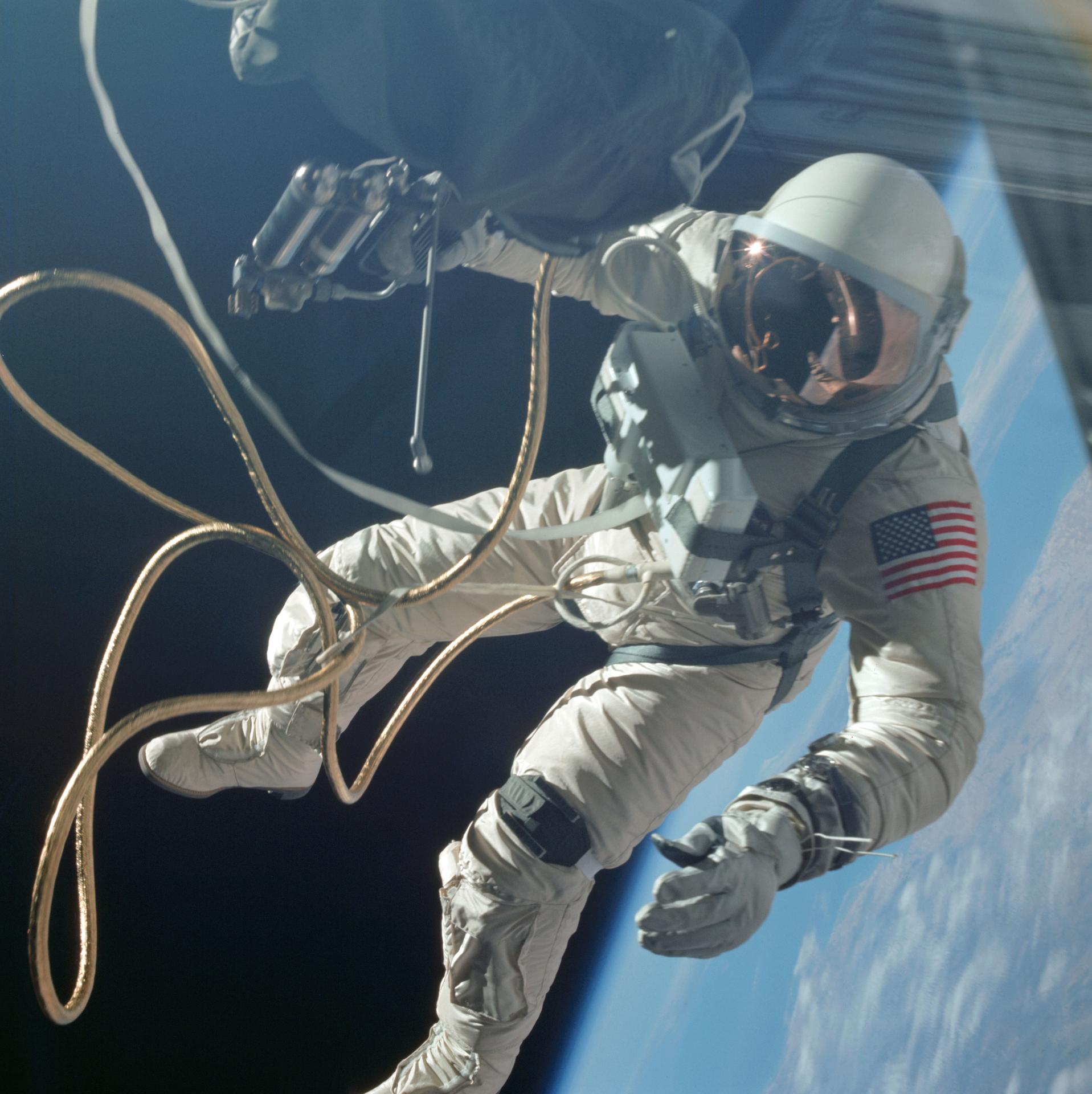
June 3, 1965 — Gemini IV. Ed White made the first American spacewalk — about 23 minutes outside — with an Omega Speedmaster 105.003 (cal. 321) strapped over his left suit sleeve, visible in James McDivitt’s famous photograph. Collectors know the 105.003-65 as the “Ed White” for exactly this reason; our 105.012 reference page covers its successor, the watch that went to the Moon.
August 21–29, 1965 — Gemini V. Gordon Cooper flew his NASA-issued Speedmaster — the flown watch now sits in the Smithsonian’s collection. His crewmate Pete Conrad wore an issued Speedmaster plus his personal Glycine Airman automatic: the first automatic wristwatch flown in space, worn again on Gemini XI the following year.
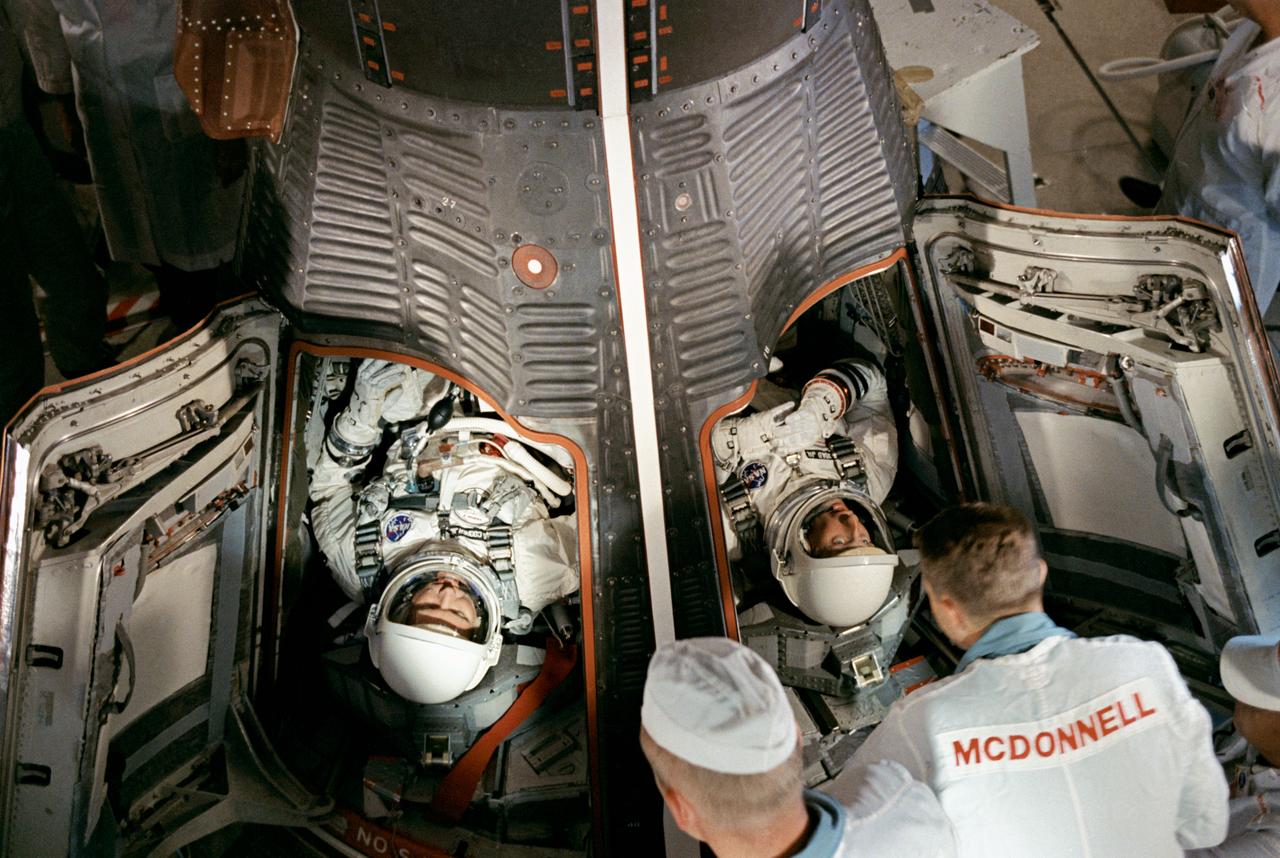
By the end of Gemini, the pattern was set: the Speedmaster wasn’t an accessory, it was kit. Apollo would prove why that mattered.
Speedmaster Gonzales™ is an independent horology publication. It is not affiliated with or endorsed by NASA, the Smithsonian Institution, Omega SA, or any astronaut or estate named here. Watch identifications are editorial commentary on the public historical record.
Sources: Smithsonian NASM, “Space Time Technology” (2025) · NASM object record: Cooper’s flown Gemini V chronograph · OMEGA: First Omega in Space (Schirra, Sigma 7) · Hodinkee: John Glenn’s Heuer stopwatch · Breitling: the Carpenter Cosmonaute account